[the_ad id="3024875"]
Dame Jane Goodall revolutionised our understanding of our closest primate cousins
The conservationist, who died aged 91 on Wednesday, challenged how we relate to the natural world.
[the_ad id="3024875"]

The environmental news site since 1991
The environmental news site since 1991
The conservationist, who died aged 91 on Wednesday, challenged how we relate to the natural world.
Rats are multiplying at speed in urban areas. So, what’s really behind the boom – and is it now unstoppable?

The second Trump administration has removed more climate and environmental data from websites in the first 100 days than the first administration, according to a new report (Image credit: Evan Vucci)
Canada is having its second worst wildfire season yet. Two scientists explain what a red air alert means and how anyone living in impacted areas can protect themselves.

The 14-day stoppage comes as a federal judge considers whether additional construction of the immigration detention facility in south Florida’s Everglades is detrimental to the environment. (Image credit: Andrew Caballero-Reynolds)
Spotted lanternflies are appearing all over the East Coast. The invasive insects damage plants and trees. What should you do when you spot them?
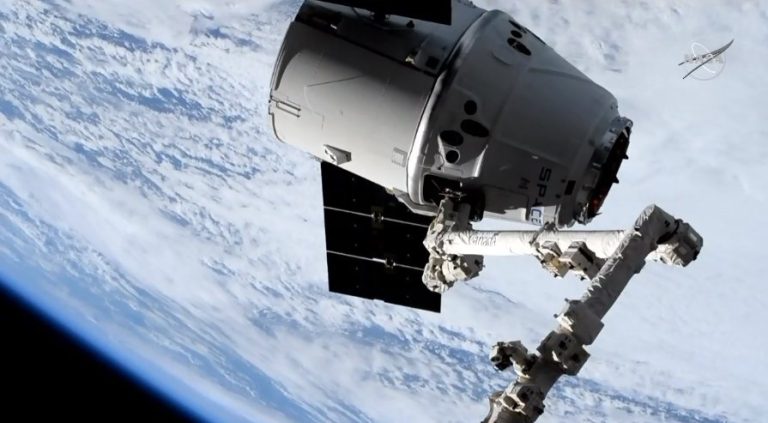
The Trump administration has asked NASA staffers to draw up plans to end at least two satellite missions that measure carbon dioxide in the atmosphere, according to current and former NASA employees. (Image credit: NASA TV)

The volcano may have been primed to erupt before the magnitude 8.8 quake pushed it over the edge. (Image credit: Artem Sheldr)
Over the last six months, Americans have been inundated with a near-constant stream of announcements from the federal government — programs shuttered, funding cut, jobs eliminated, and regulations gutted. President Donald Trump and his administration are executing a systematic dismantling of the environmental, economic, and scientific systems that underpin our society. The onslaught can feel overwhelming, opaque, or sometimes even distant, but these policies will have real effects on Americans’ daily lives. In this new guide, Grist examines the impact these changes could have, and are already having, on the things you do every day. Flipping on your lights. Turning on your faucet. Paying household bills. Visiting a park. Checking the weather forecast. Feeding your family. The decisions have left communities less safe from pollution, more vulnerable to climate disasters, and facing increasingly expensive energy bills, among other changes. Read on to see how. — Katherine Bagley Your Home Flip on your lights: Pulling back from renewable energy could make your electricity bills go up. When Trump began his second term, it was with a vow to “unleash American energy.” But over the last six months, it’s become clear that this call to arms was meant strictly for fossil fuels, not the country’s booming renewable energy industry. Trump has issued a series of executive orders to revive coal production, and he has opened up millions of acres of public land to oil and gas drilling and issued a moratorium on offshore wind leases. This commitment was deepened with the Republican-led One Big Beautiful Bill Act signed into law on July 4. It bolsters investment in fossil fuels while sunsetting Biden-era credits for electric vehicles, energy efficiency, and wind, solar, and green hydrogen. Climate and clean energy advocates described the bill as “historically

The Arctic island of Svalbard is so reliably frigid that humanity bet its future on the place. Since 2008, the Svalbard Global Seed Vault — set deep in frozen soil known as permafrost — has accepted nearly 1.4 million samples of more than 6,000 species of critical crops. But, the island is warming six to seven times faster than the rest of the planet, making even winters freakishly hot, at least by Arctic standards. Indeed, in 2017, an access tunnel to the vault flooded as permafrost melted, though the seeds weren’t impacted. This February, a team of scientists was working on Svalbard when irony took hold. Drilling into the soil, they gathered samples of bacteria that proliferate when the ground thaws. These microbes munch on organic matter and burp methane, an extremely potent greenhouse gas and significant driver of global warming. Those emissions are potentially fueling a feedback loop in the Arctic: As more soil thaws, more methane is released, leading to more thawing and more methane, and on and on. Read Next Ice roads are a lifeline for First Nations. As Canada warms, they’re disappearing. Hilary Beaumont In some parts of Svalbard, though, the scientists didn’t need to drill. Air temperatures climbed above freezing for 14 of the 28 days of February, reaching 40 degrees Fahrenheit, when the average temperature at this time of year is 5 degrees. Snow vanished in places, leaving huge pools of water. “I brought my equipment to drill into frozen soil and then ended up sampling a lot of soil just with a spoon, like it was soft ice cream,” said Donato Giovannelli, a geomicrobiologist at the University of Naples Federico II and co-lead author


